Can Earwax Cause Tinnitus? What You Need to Know
Expert Summary: Earwax buildup may make tinnitus more noticeable by blocking the ear canal and reducing external sound. This guide explains how impacted earwax can affect hearing, when removal may help, and when persistent symptoms should be assessed by a healthcare professional.
Can Earwax Cause Tinnitus? What You Need to Know
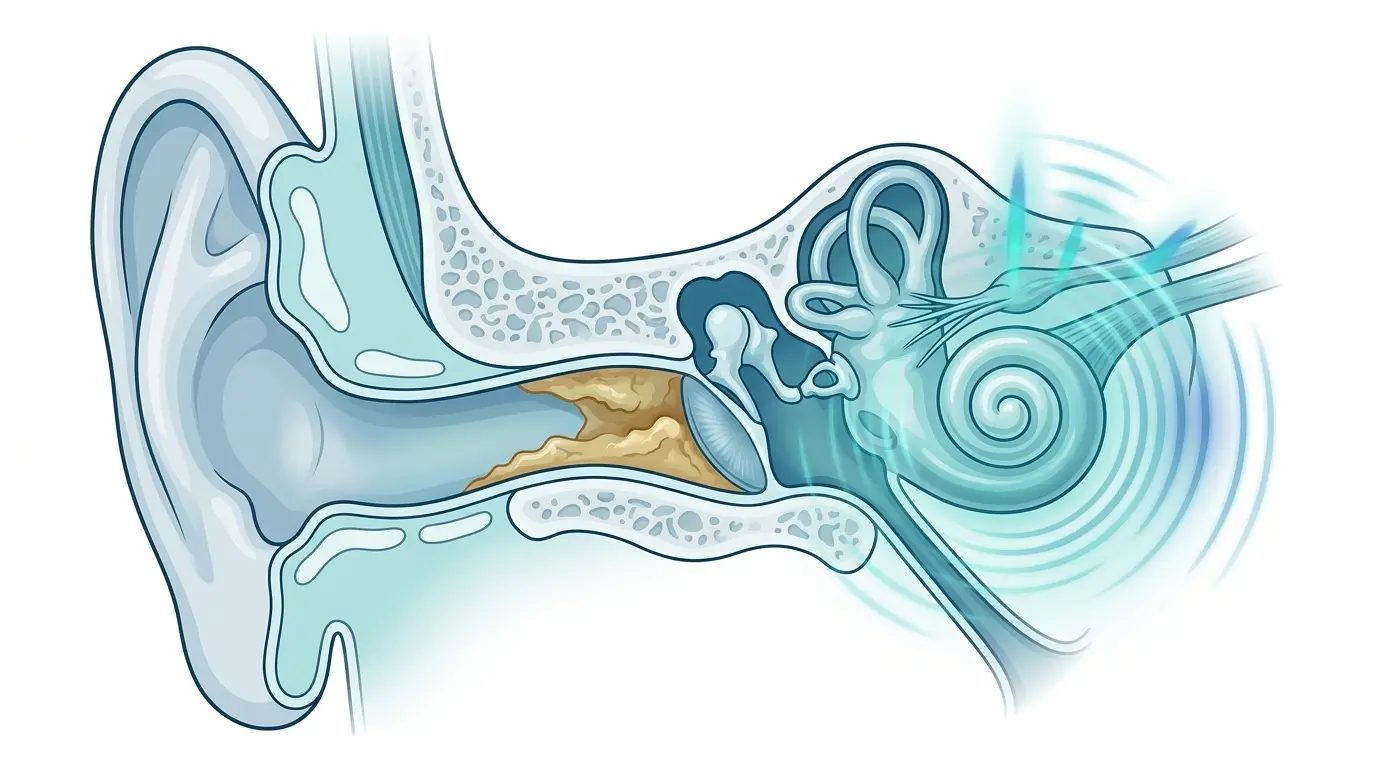
Yes, earwax can sometimes contribute to tinnitus. When earwax becomes impacted and blocks the ear canal, it may affect hearing and alter how sounds are processed by the auditory system. In some cases, removing excessive earwax may reduce or even eliminate tinnitus symptoms. However, earwax is only one of many possible causes of tinnitus, and not everyone with tinnitus has an earwax problem.
Quick Answer
Impacted earwax can sometimes cause or worsen tinnitus by blocking the ear canal and affecting hearing. When hearing becomes muffled due to earwax buildup, internal sounds may become more noticeable. If excessive earwax is contributing to tinnitus symptoms, professional removal may help improve the condition.
What This Guide Covers
- What earwax is and why it exists
- How earwax may contribute to tinnitus
- Symptoms of impacted earwax
- Whether removing earwax can improve tinnitus
- Safe earwax removal methods
- Earwax myths and misconceptions
- When to seek medical advice
What Is Earwax?
Earwax, also known as cerumen, is a naturally produced substance found inside the ear canal. Although many people view earwax as something dirty that should be removed, it actually serves several important functions.
Earwax helps:
- Trap dust and debris
- Prevent insects from entering the ear canal
- Protect delicate ear tissues
- Lubricate the ear canal
- Reduce the risk of infection
In most people, earwax naturally moves outward and eventually falls away without any assistance. The ear is largely self-cleaning.
Problems usually occur when earwax becomes excessive, compacted, or pushed deeper into the ear canal.
What Is Tinnitus?
Tinnitus is the perception of sound without an external source. People often describe tinnitus as:
- Ringing
- Buzzing
- Humming
- Hissing
- Clicking
- Roaring
- Whistling
- Pulsing
As discussed in our article: What Does Tinnitus Sound Like?, tinnitus can sound very different from one person to another.
For some individuals, tinnitus is mild and only noticeable in quiet environments. For others, it can interfere with concentration, sleep, relaxation, and daily life.
Importantly, tinnitus itself is not a disease. It is a symptom that may be associated with a variety of underlying factors.
Can Earwax Cause Tinnitus?
Yes, in some cases.
When earwax accumulates and blocks part or all of the ear canal, it can affect how sound reaches the eardrum. This reduction in hearing input may make internal sounds more noticeable.
Many experts believe that when normal hearing is reduced, the brain may compensate by increasing sensitivity to certain sounds. This increased awareness can make tinnitus appear louder or more noticeable.
This is why some people experience tinnitus alongside:
- Earwax blockage
- Temporary hearing changes
- Ear infections
- Sinus congestion
- Hearing loss
However, it is important to understand that earwax is only one possible contributor. Many people with tinnitus have perfectly clear ear canals.
How Earwax Buildup May Affect Hearing
To understand why earwax can influence tinnitus, it helps to understand how hearing works.
Normally, sound travels through the ear canal and reaches the eardrum. Vibrations then pass through the middle and inner ear before being processed by the brain.
When excessive earwax blocks the canal:
- Less sound reaches the eardrum
- Hearing may become muffled
- Environmental sounds may be reduced
- Internal sounds may become more noticeable
Some people compare the experience to wearing earplugs. The quieter the outside world becomes, the easier it can be to notice tinnitus.
This is one reason many people report that tinnitus feels louder in quiet environments.
If you’re curious about why tinnitus often seems more noticeable when there is little background noise, read our guide on Is Silence Bad for Tinnitus?.
Symptoms of Impacted Earwax
Not all earwax causes problems. In fact, most people never need to remove earwax at all.
However, when earwax becomes impacted, a variety of symptoms may develop.
Common symptoms include:
- Ringing, buzzing, or humming in the ears
- A sensation of fullness in the ear
- Muffled hearing
- Temporary hearing loss
- Ear discomfort
- Itching inside the ear canal
- Dizziness or balance issues
- A feeling that the ear is blocked
Some people are surprised to learn that tinnitus may be one of the first noticeable symptoms of excessive earwax buildup.
Because tinnitus has many possible causes, it can be difficult to know whether earwax is responsible without examining the ear canal.
Who Is Most at Risk of Earwax Buildup?
Although anyone can develop impacted earwax, some individuals are more likely to experience problems.
People Who Use Cotton Buds
One of the biggest misconceptions about ear care is that cotton buds remove earwax.
In reality, cotton buds often push wax deeper into the ear canal, making blockages more likely.
Hearing Aid Users
Hearing aids can sometimes interfere with the ear’s natural self-cleaning process.
This may increase the likelihood of earwax accumulation over time.
Earbud and Headphone Users
Frequent use of earbuds may contribute to earwax becoming compacted deeper inside the ear canal.
While headphones do not directly cause earwax production, they can sometimes contribute to buildup in susceptible individuals.
Older Adults
As people age, earwax may become drier and harder, making natural removal more difficult.
This can increase the risk of impaction.
Individuals With Narrow Ear Canals
Some people naturally have ear canals that make it more difficult for earwax to move outward normally.
As a result, wax may accumulate more easily.
Can Earwax Removal Improve Tinnitus?
Sometimes, yes.
If impacted earwax is contributing to tinnitus symptoms, removing the blockage may help reduce or eliminate the ringing, buzzing, or humming.
Many people report noticeable improvement after professional earwax removal.
However, results vary depending on the underlying cause.
When Earwax Removal May Help
Earwax removal is more likely to improve tinnitus when:
- Symptoms appeared alongside a blocked-ear sensation
- Hearing became muffled at the same time
- Excessive earwax is visible during examination
- Tinnitus developed after earwax buildup occurred
When Earwax Removal May Not Help
If tinnitus is caused by:
- Hearing loss
- Noise exposure
- Stress
- Certain medications
- Inner ear conditions
- Other medical factors
Removing earwax may have little or no effect on symptoms.
This is why professional evaluation can be valuable when tinnitus persists.
How Quickly Can Tinnitus Improve After Earwax Removal?
If earwax is the primary cause, some people notice improvement immediately after removal.
Others may experience gradual improvement over several days as the auditory system adjusts to restored hearing input.
In some cases, tinnitus may persist despite successful earwax removal because another underlying factor is contributing to the symptoms.
Every situation is different.
Safe Earwax Removal Methods
If you suspect excessive earwax buildup, it is important to choose safe removal methods.
Earwax Softening Drops
Over-the-counter ear drops are often used to soften hardened earwax.
These products may help the ear’s natural cleaning process work more effectively.
Professional Irrigation
Some healthcare professionals use gentle irrigation techniques to flush softened earwax from the ear canal.
This should only be performed when appropriate and by someone trained in the procedure.
Microsuction
Microsuction is a common professional earwax removal method used in many clinics.
A small suction device removes wax while the ear canal is viewed under magnification.
Many people find this method quick and effective.
Manual Removal
Healthcare professionals may also use specialised instruments to carefully remove impacted earwax.
This approach is often used when other methods are unsuitable.
What NOT to Do
When people experience ear blockage or tinnitus, they often attempt home remedies that can make the problem worse.
Avoid:
Cotton Buds
Cotton buds frequently push wax deeper into the ear canal.
Hairpins or Other Objects
Inserting objects into the ear can cause injury, infection, or damage to the eardrum.
Ear Candling
Ear candling is widely promoted online, but there is little scientific evidence that it safely removes earwax.
Some healthcare organisations specifically advise against it.
Excessive Self-Cleaning
The ears are generally self-cleaning.
Attempting to remove earwax too frequently can irritate the ear canal and create additional problems.
Common Earwax Myths
Myth #1: Earwax Is Dirty
Earwax is actually protective and beneficial.
It helps keep the ears healthy and functioning properly.
Myth #2: Everyone Needs Regular Ear Cleaning
Most people do not need to clean inside their ears at all.
The ear naturally removes excess wax over time.
Myth #3: Cotton Buds Are the Best Cleaning Tool
Cotton buds are one of the most common causes of impacted earwax.
Myth #4: All Tinnitus Is Caused by Earwax
Earwax is only one possible contributor.
Many people with tinnitus have no earwax blockage whatsoever.
Myth #5: Removing Earwax Always Cures Tinnitus
If earwax is the cause, symptoms may improve.
However, tinnitus often has multiple contributing factors.
Other Common Causes of Tinnitus
Although earwax can sometimes play a role, tinnitus is more commonly associated with:
- Age-related hearing changes
- Noise-induced hearing loss
- Stress and anxiety
- Sleep deprivation
- Certain medications
- Ear infections
- Head and neck injuries
- Cardiovascular conditions
This is why persistent tinnitus should not automatically be assumed to be caused by earwax.
Sleep quality can have a surprisingly strong impact on tinnitus perception. Learn more in Can Lack of Sleep Make Tinnitus Worse?.
When Should You See a Healthcare Professional?
Consider seeking professional advice if tinnitus:
- Starts suddenly
- Occurs in only one ear
- Is accompanied by hearing loss
- Is associated with dizziness
- Follows a head injury
- Sounds rhythmic or pulse-like
- Significantly affects daily life
A healthcare professional can help determine whether earwax or another factor may be contributing to symptoms.
Key Takeaways
- Earwax is a normal and beneficial part of ear health.
- Excessive earwax buildup can sometimes contribute to tinnitus.
- Impacted earwax may cause muffled hearing, ear fullness, and ringing in the ears.
- Removing excessive earwax may improve tinnitus symptoms when earwax is the underlying cause.
- Cotton buds and home ear-cleaning tools often make earwax problems worse.
- Persistent tinnitus can have many causes beyond earwax buildup.
Medical Disclaimer: This content is for educational and informational purposes only and is not medical advice. Always consult a qualified healthcare professional regarding hearing concerns, tinnitus symptoms, or medical conditions.
Frequently Asked Questions
Can earwax directly cause tinnitus?
Yes. Impacted earwax can sometimes contribute to tinnitus by affecting hearing and making internal sounds more noticeable.
Will removing earwax stop tinnitus completely?
If earwax is the primary cause, symptoms may improve significantly. However, tinnitus has many possible causes, so results vary.
Can earwax cause ringing in one ear?
Yes. If a blockage affects only one ear, tinnitus may be more noticeable on that side.
How do I know if my tinnitus is caused by earwax?
Signs may include muffled hearing, ear fullness, and visible earwax buildup. A healthcare professional can confirm this.
Can headphones cause earwax buildup?
Frequent earbud use may contribute to earwax becoming compacted in some individuals.
Is earwax-related tinnitus permanent?
Usually not. If earwax is the cause, symptoms often improve after the blockage is removed.
Can stress make earwax-related tinnitus worse?
Stress may increase awareness of tinnitus, making symptoms feel more noticeable.
You may also find our article: Can Stress Make Tinnitus Worse? Understanding the connection is helpful.
Is it safe to remove earwax at home?
Minor earwax buildup may respond to softening drops, but persistent blockage should be assessed by a healthcare professional.
Can impacted earwax cause hearing loss?
Yes. Excessive earwax can temporarily reduce hearing until the blockage is removed.
Should I use cotton buds to remove earwax?
No. Cotton buds often push wax deeper into the ear canal and increase the risk of impaction.
Medical Sources Reviewed
The information in this article was informed by guidance and educational materials from the following organisations:
- National Institute on Deafness and Other Communication Disorders (NIDCD)
- NHS
- Mayo Clinic
- Cleveland Clinic
- American Academy of Otolaryngology–Head and Neck Surgery
Final Thoughts
Earwax is a normal and important part of ear health, but excessive buildup can occasionally contribute to tinnitus symptoms.
When earwax becomes impacted, it may reduce hearing, create a sensation of blockage, and make ringing or buzzing in the ears more noticeable. In these situations, professional earwax removal may provide significant relief.
However, tinnitus is a complex symptom with many possible causes. While earwax is sometimes responsible, persistent tinnitus is often linked to hearing changes, stress, sleep quality, noise exposure, or other health factors.
If you suspect earwax may be contributing to your symptoms, it is worth having your ears examined before assuming the cause is something more serious. A simple assessment can often provide clarity and help guide the next steps.
Most importantly, remember that tinnitus is common, and many people successfully manage their symptoms through healthy habits, sound therapy, stress management, and appropriate medical care when needed.
You may also find practical strategies in our article: Daily Habits That May Reduce Ear Ringing.
👉 Download the Free 7-Day Tinnitus Relief Plan
Discover simple daily habits designed to support better sleep, reduced stress, and improved ear wellness naturally.