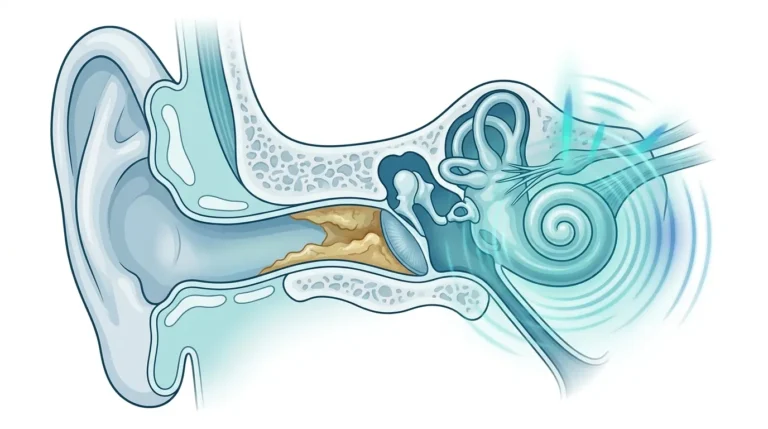
Tinnitus in One Ear vs Both Ears: What Does It Mean?
Expert Summary: Tinnitus can affect one ear or both ears, and the location alone does not determine how serious it is. This guide explains the differences between unilateral and bilateral tinnitus, common causes, and when symptoms should be assessed by a healthcare professional.
Tinnitus is often described as a ringing, buzzing, humming, or hissing sound that occurs without an external source. While many people focus on the sound itself, another common concern is where the sound seems to be coming from.
Some people hear tinnitus in only one ear. Others experience it in both ears. In some cases, the sound may even seem to come from inside the head rather than a specific ear.
This naturally raises questions. Is tinnitus in one ear more serious? Does bilateral tinnitus mean something different? Should you be concerned if symptoms affect only one side?
The good news is that tinnitus can occur in one ear or both ears, and neither situation automatically indicates a serious problem. However, understanding the differences can help you better evaluate your symptoms and know when professional advice may be appropriate.
Quick Answer
Tinnitus can affect one ear, both ears, or sometimes seem to come from inside the head. Tinnitus affecting both ears is generally more common and is often associated with hearing loss, noise exposure, or age-related hearing changes. Tinnitus affecting only one ear may have similar causes but sometimes deserves additional medical evaluation, especially if it develops suddenly or is accompanied by hearing loss, dizziness, or other symptoms.
What Is the Difference Between Tinnitus in One Ear and Both Ears?
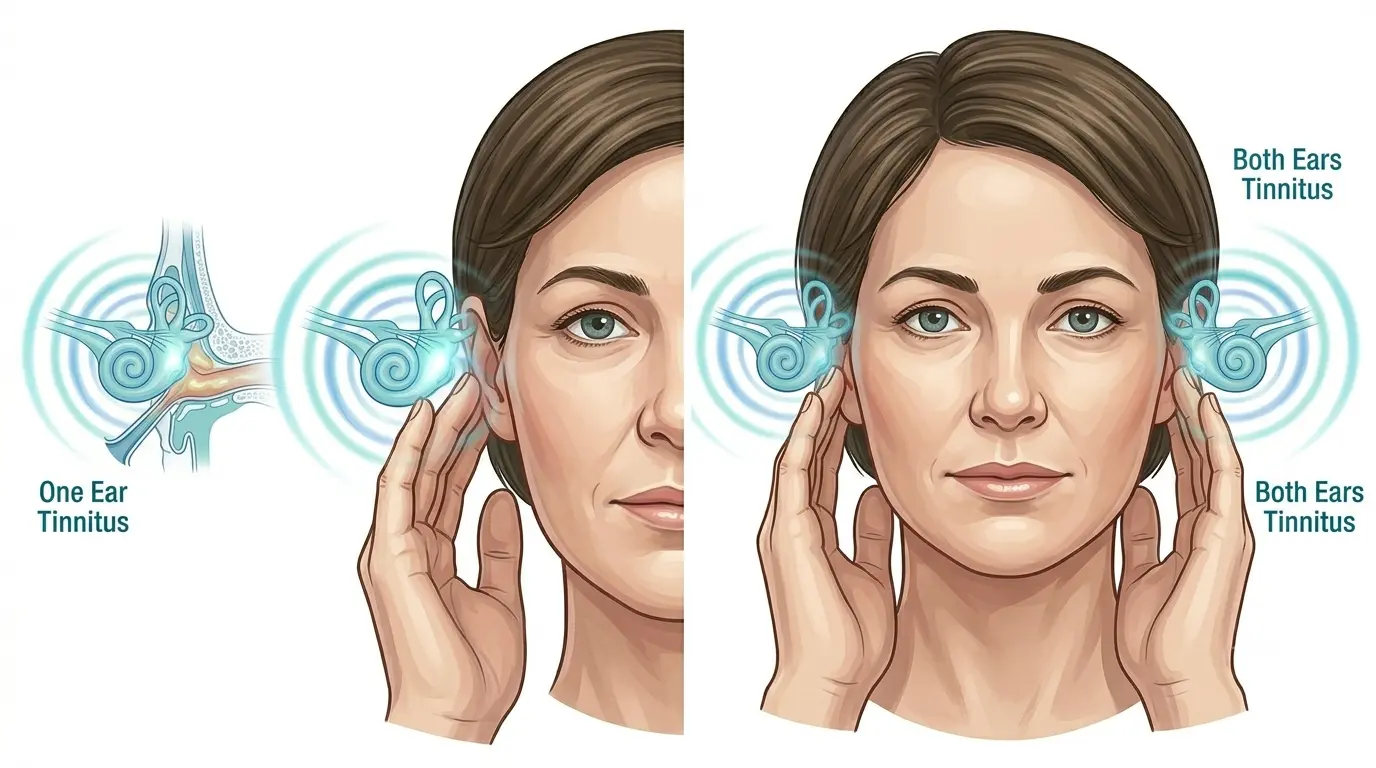
Tinnitus affecting one ear is called unilateral tinnitus, while tinnitus affecting both ears is called bilateral tinnitus.
In general:
- Bilateral tinnitus is more common.
- Unilateral tinnitus affects only one side.
- Both types may share similar causes.
- One-sided tinnitus sometimes warrants closer medical evaluation.
- The location alone does not determine how serious tinnitus is.
What This Guide Covers
- What unilateral and bilateral tinnitus mean
- Why tinnitus may affect one ear or both ears
- Common causes of one-sided tinnitus
- Common causes of bilateral tinnitus
- When one-sided tinnitus deserves medical attention
- How tinnitus location may change over time
- Ways to manage tinnitus symptoms
What Is Tinnitus?
Tinnitus is the perception of sound when no external sound source is present.
People commonly describe tinnitus as:
- Ringing
- Buzzing
- Humming
- Hissing
- Clicking
- Whistling
- Roaring
- Pulsing
The sound may be continuous or intermittent and can vary significantly from person to person.
Some people notice tinnitus only occasionally, while others hear it throughout the day.
The volume, pitch, and character of the sound can also change over time.
For a more detailed explanation of the different sounds people hear, see our guide on What Does Tinnitus Sound Like? Common Ringing, Buzzing and Humming Explained.
Can Tinnitus Affect One Ear or Both Ears?
Yes.
Tinnitus can affect:
- One ear only
- Both ears simultaneously
- One ear is stronger than the other
- The centre of the head
- No clearly identifiable location
The exact location often depends on the underlying factors contributing to the tinnitus.
While many people assume tinnitus should affect both ears equally, that is not always the case.
In fact, many tinnitus sufferers initially notice symptoms on only one side.
One Ear vs Both Ears Tinnitus
| Feature | One Ear (Unilateral) | Both Ears (Bilateral) |
| Location | Left or right ear | Both ears |
| Medical Term | Unilateral tinnitus | Bilateral tinnitus |
| Common Causes | Earwax, congestion, hearing changes | Hearing loss, ageing, and noise exposure |
| Evaluation Needed? | Sometimes | Usually less urgent |
| How Common? | Less common | More common |
Tinnitus in One Ear (Unilateral Tinnitus)
When tinnitus affects only one ear, healthcare professionals refer to it as unilateral tinnitus.
Examples include:
- Ringing in the left ear
- Buzzing in the right ear
- Humming in one ear only
- Intermittent sounds affecting a single side
Some individuals consistently experience tinnitus in one ear.
Others may notice that symptoms seem stronger on one side, even though both ears are technically affected.
Unilateral tinnitus is relatively common and does not automatically indicate a serious condition.
However, it often receives closer medical attention because certain underlying causes may affect only one ear.
Tinnitus in Both Ears (Bilateral Tinnitus)
Bilateral tinnitus affects both ears.
This is generally considered the most common type of tinnitus.
People with bilateral tinnitus often describe:
- Ringing in both ears
- Buzzing across the head
- Symmetrical sounds on both sides
- Difficulty identifying a specific location
Because hearing changes often occur in both ears, tinnitus associated with hearing loss frequently affects both sides as well.
Many individuals with bilateral tinnitus report that the sound feels evenly distributed across their hearing rather than originating from a specific ear.
Common Causes of Tinnitus in One Ear
Earwax Buildup
One of the most common and easily treatable causes is impacted earwax.
When earwax partially blocks the ear canal, hearing may be reduced on one side.
This can make internal sounds more noticeable.
People with earwax-related tinnitus may also experience:
- Ear fullness
- Muffled hearing
- Pressure sensations
- Temporary hearing changes
For a deeper understanding of how earwax can contribute to ringing and other ear symptoms, see our guide Can Earwax Cause Tinnitus?.
Ear Infections
Ear infections affecting the outer or middle ear can sometimes contribute to temporary tinnitus, particularly when pressure and inflammation are present.
Additional symptoms may include:
- Pain
- Pressure
- Drainage
- Reduced hearing
- A feeling of blockage
Tinnitus often improves as the infection resolves.
Noise Exposure
Exposure to loud sounds can sometimes affect one ear more than the other, particularly if one side receives greater noise exposure.
Examples include:
- Firearms
- Concert speakers
- Power tools
- Industrial machinery
- Sporting events
Hearing Loss
Hearing loss is one of the most common factors associated with tinnitus.
When hearing changes affect one ear more significantly than the other, tinnitus may also appear stronger on that side.
Eustachian Tube Dysfunction
Symptoms may include:
- Ear fullness
- Pressure changes
- Muffled hearing
- Temporary tinnitus
This condition may affect one ear or both ears.
Common Causes of Tinnitus in Both Ears
Age-Related Hearing Changes
As people age, gradual hearing changes often occur in both ears.
Because the auditory system is affected on both sides, tinnitus may also become bilateral.
Long-Term Noise Exposure
Years of repeated exposure to loud environments can contribute to hearing-related tinnitus that affects both ears.
Examples include:
- Construction work
- Factory environments
- Military service
- Frequent loud music exposure
- Heavy machinery operation
Stress and Anxiety
Many people report increased tinnitus awareness during periods of:
- Stress
- Anxiety
- Emotional strain
- Mental fatigue
- Major life changes
If worry and tinnitus seem to feed off each other, our article Tinnitus and Anxiety: What’s the Connection? explains why this cycle occurs and how to manage it.
Sleep Problems
When people are tired, tinnitus often becomes more noticeable and harder to ignore.
Poor sleep and tinnitus often influence each other. You may also find our guide Can Lack of Sleep Make Tinnitus Worse? helpful.
Does the Location of Tinnitus Matter?
In many cases, the location itself does not determine how serious tinnitus is.
Many cases of one-sided tinnitus are caused by relatively common issues such as:
- Earwax buildup
- Congestion
- Noise exposure
- Temporary hearing changes
Healthcare professionals usually focus more on:
- When symptoms started
- Whether hearing loss is present
- Whether dizziness is present
- Whether symptoms are worsening
- Whether tinnitus is pulsatile
When One-Sided Tinnitus Deserves Medical Attention
Consider speaking with a healthcare professional if tinnitus:
- Develops suddenly
- Affects only one ear
- Occurs alongside hearing loss
- Is accompanied by dizziness
- Appears after a head injury
- Sounds rhythmic or pulse-like
- Significantly affects daily life
Can Tinnitus Move Between Ears?
Yes.
Some people notice that tinnitus seems stronger in one ear on certain days and stronger in the other ear at different times.
Possible factors include:
- Stress levels
- Sleep quality
- Congestion
- Allergies
- Changes in attention
- Temporary hearing differences
This does not necessarily indicate worsening tinnitus.
Can Tinnitus in One Ear Be Temporary?
Yes.
Common temporary causes include:
Earwax Buildup
Impacted earwax can temporarily affect hearing and make tinnitus more noticeable.
Allergies and Congestion
Seasonal allergies and sinus congestion can affect pressure inside the ears.
Allergies and congestion can temporarily affect ear pressure and tinnitus perception. Learn more in Can Allergies Make Tinnitus Worse?
Flying and Pressure Changes
Altitude changes may temporarily affect middle-ear pressure.
Temporary Noise Exposure
Loud concerts or noisy environments can trigger temporary one-sided tinnitus.
Can Hearing Loss Affect One Ear More Than the Other?
Yes.
One ear may experience greater hearing changes due to:
- Previous noise exposure
- Ear infections
- Physical injury
- Occupational noise
- Individual hearing differences
This is one reason healthcare professionals often recommend hearing evaluations when tinnitus affects only one ear.
Pulsatile Tinnitus in One Ear
Some people hear a rhythmic sound that follows the beat of their heartbeat.
People often describe it as:
- Whooshing
- Pulsing
- Thumping
- Rhythmic rushing sounds
- Heartbeat sounds
New or persistent pulsatile tinnitus deserves medical evaluation.
Why One-Sided Tinnitus Often Causes More Anxiety
Many people become especially concerned when tinnitus affects only one ear.
A common cycle often looks like this:
- Tinnitus becomes noticeable.
- Concern increases.
- Attention focuses on the sound.
- The sound feels louder.
- Anxiety increases further.
Breaking this cycle is often an important part of tinnitus management.
Real-Life Examples of One-Ear vs Both-Ear Tinnitus
Example 1
“I only hear ringing in my left ear when I go to bed.”
Quiet environments often make tinnitus easier to notice.
Example 2
“My tinnitus started in my right ear after a loud concert.”
Noise exposure can sometimes affect one ear more than the other.
Example 3
“I hear buzzing in both ears throughout the day.”
This is a common description among people with bilateral tinnitus.
Example 4
“My tinnitus seems to switch sides.”
Many people report fluctuations during periods of stress, fatigue, or congestion.
Example 5
“I hear a humming sound in one ear when my allergies flare up.”
Changes in ear pressure caused by allergies can temporarily influence tinnitus perception.
Can Stress Make One Ear Ring More Than the Other?
During stressful periods, many people report:
- Increased tinnitus awareness
- Greater sensitivity to sound
- More difficulty concentrating
- Poorer sleep quality
- Stronger emotional reactions to tinnitus
Because stress can make tinnitus feel louder and more intrusive, you may also find our article Can Stress Make Tinnitus Worse? useful.
How to Manage Tinnitus Regardless of Location
Protect Your Hearing
Use hearing protection when:
- Attending concerts
- Operating power tools
- Working in noisy environments
- Using loud equipment
Manage Stress
Helpful techniques include:
- Deep breathing
- Meditation
- Walking
- Mindfulness exercises
- Gentle stretching
Improve Sleep Habits
Maintaining a consistent sleep schedule can be particularly helpful.
Use Gentle Background Sound
Popular options include:
- White noise
- Rain sounds
- Ocean waves
- Nature recordings
- Soft instrumental music
Address Underlying Ear Problems
If tinnitus is linked to earwax, allergies, congestion, or infections, treating the underlying issue may help.
Key Takeaways
- Tinnitus can occur in one ear, both ears, or seem to originate from inside the head.
- Bilateral tinnitus is generally more common than unilateral tinnitus.
- One-sided tinnitus is often linked to common causes such as earwax, congestion, or hearing changes.
- A healthcare professional should evaluate sudden tinnitus in one ear.
- Stress, sleep quality, and hearing health can influence tinnitus regardless of location.
Medical Disclaimer: This content is for educational and informational purposes only and is not medical advice. Always consult a qualified healthcare professional regarding hearing concerns, tinnitus symptoms, or medical conditions.
Frequently Asked Questions
Is tinnitus in one ear normal?
Yes. Tinnitus may affect one ear or both ears.
Is tinnitus in one ear more serious?
Not always, but one-sided tinnitus often warrants closer medical evaluation.
Can earwax cause tinnitus in one ear?
Yes. Impacted earwax can sometimes contribute to tinnitus affecting a single ear.
Why do I hear ringing only in my left ear?
Possible causes include earwax buildup, hearing changes, congestion, noise exposure, or other ear-related conditions.
Why do I hear ringing only in my right ear?
The potential causes are similar to those affecting the left ear.
Can tinnitus switch from one ear to the other?
Yes. Some people report changes in the perceived location of their tinnitus over time.
Is tinnitus in both ears more common?
Yes. Bilateral tinnitus is generally more common than unilateral tinnitus.
Can stress affect one-sided tinnitus?
Yes. Stress can increase awareness of tinnitus regardless of location.
Should I worry about sudden tinnitus in one ear?
Sudden tinnitus deserves prompt medical evaluation, especially if accompanied by hearing loss or dizziness.
Can tinnitus start in one ear and later affect both ears?
Yes. Some people initially notice tinnitus in one ear and later perceive it in both ears.
Can tinnitus disappear on its own?
Some temporary cases improve over time, while others persist and require ongoing management.
Medical Sources Reviewed
- National Institute on Deafness and Other Communication Disorders (NIDCD)
- NHS
- Mayo Clinic
- Cleveland Clinic
- American Academy of Otolaryngology–Head and Neck Surgery
Final Thoughts
Tinnitus can affect one ear, both ears, or sometimes seem to originate from inside the head.
While bilateral tinnitus is generally more common, unilateral tinnitus is not unusual and often has relatively straightforward explanations such as earwax buildup, congestion, hearing changes, allergies, or noise exposure.
The most important thing is to pay attention to accompanying symptoms and seek professional advice when tinnitus develops suddenly, affects only one ear, or is associated with hearing loss, dizziness, or other concerning changes.
Understanding whether tinnitus affects one ear or both ears can provide valuable clues about your symptoms and help guide appropriate next steps toward better ear health and peace of mind.
👉 Download the Free 7-Day Tinnitus Relief Plan
Discover simple daily habits designed to support better sleep, reduced stress, and improved ear wellness naturally.