Why Is My Tinnitus Getting Worse? 10 Possible Reasons and What to Do
Expert Insight: Tinnitus can become more noticeable for many reasons, and increased loudness does not necessarily mean the underlying condition has become more serious. Changes in hearing, noise exposure, stress, sleep and ear health can all influence tinnitus perception. New, sudden or unusual symptoms should nevertheless be medically assessed, particularly when hearing or balance changes are involved.

If your tinnitus suddenly seems louder, more persistent or simply harder to ignore, it is understandable to wonder: why is my tinnitus getting worse?
Tinnitus can fluctuate. Some people notice relatively quiet periods followed by days when the ringing, buzzing, humming or hissing seems much more noticeable. A change in tinnitus does not always mean that something has physically worsened inside your ears. Stress, poor sleep, noise exposure, changes in hearing, and even your surrounding environment can influence how noticeable tinnitus feels.
However, a significant or sudden change should not automatically be dismissed as a normal tinnitus flare-up. Certain changes — particularly tinnitus accompanied by sudden hearing loss, severe dizziness, facial weakness or symptoms following a head injury — require prompt medical attention.
Quick Answer: Why Is My Tinnitus Getting Worse?
Tinnitus may temporarily feel worse because of loud noise exposure, stress, poor sleep, hearing changes, earwax, ear or sinus problems, certain medications or increased attention to the sound. Sometimes there is no obvious trigger.
If your tinnitus has changed suddenly, is only in one ear, beats in time with your pulse, or occurs alongside sudden hearing loss, significant dizziness, facial weakness or a recent head injury, seek appropriate medical assessment rather than assuming it is simply a temporary flare-up.
What This Guide Covers
- Why tinnitus can change from day to day
- 10 possible reasons tinnitus may seem worse
- How stress and sleep can affect tinnitus awareness
- How noise exposure and hearing changes may contribute
- When earwax, allergies or medications may be relevant
- What you can do when tinnitus suddenly feels more noticeable
- When a change in tinnitus should be medically assessed
Can Tinnitus Really Get Worse?
Yes. Tinnitus symptoms can change over time. The sound may seem louder or quieter, its pitch may change, or it may become easier or harder to ignore.
It is also important to distinguish between a change in the tinnitus signal itself and a change in tinnitus awareness.
For example, tinnitus may appear much louder when you are lying in a silent bedroom than when you are walking through a busy environment. The tinnitus may not necessarily have become physically louder — there are simply fewer external sounds competing for your attention.
If you’re unsure whether what you’re hearing is typical, our guide to what tinnitus can sound like explains common ringing, buzzing, hissing, humming, whooshing and pulsing perceptions.
10 Possible Reasons Your Tinnitus Is Getting Worse
1. You Have Been Exposed to Loud Noise
Loud sound is one of the most important factors to consider when tinnitus suddenly becomes more noticeable.
Concerts, clubs, power tools, machinery, sporting events and excessively loud music through headphones can expose the auditory system to potentially damaging sound levels. Noise exposure is strongly associated with both hearing loss and tinnitus.
A temporary increase in tinnitus can sometimes occur following loud sound exposure. However, persistent tinnitus or noticeable hearing changes following noise exposure deserve professional assessment.
Headphones themselves are not automatically harmful, but listening volume and duration matter. If you regularly use earbuds or headphones, see our guide to headphones, tinnitus and safer listening habits.
What may help: Give your ears a break from unnecessarily loud sound and use appropriate hearing protection in genuinely noisy environments. Avoid turning up music or background noise in an attempt to overpower tinnitus.
2. Your Stress Levels Have Increased
Stress is one of the most common reasons people report becoming more aware of their tinnitus.
Tinnitus and stress can reinforce each other. When you feel stressed or anxious, your attention may become more focused on potential threats and uncomfortable sensations. Tinnitus can therefore become harder to ignore.
Then the tinnitus itself creates additional worry:
Stress → greater tinnitus awareness → worry about tinnitus → more stress.
This does not necessarily mean stress has caused new damage to your ears.
Our guide Can Stress Make Tinnitus Worse? explores this relationship in more detail.
If stress appears to be one of your triggers, techniques such as controlled breathing, progressive muscle relaxation and mindfulness may also be useful. See our 10 relaxation techniques for tinnitus sufferers for practical ideas.
3. You Are Not Sleeping Well
Sleep and tinnitus can form another frustrating cycle.
When you’re tired, coping with an intrusive sound may feel more difficult. Tinnitus can then interfere with relaxation and sleep, leaving you even more fatigued the following day.
A quiet bedroom can make matters worse because tinnitus may stand out more strongly when there is very little environmental sound.
We explore the sleep connection separately in Can Lack of Sleep Make Tinnitus Worse?.
What may help: Aim for a consistent sleep schedule, create a comfortable bedroom environment and develop a predictable wind-down routine. Gentle background sound can also be helpful for some people who find tinnitus particularly noticeable in silence.
For a practical setup, see How to Create a Tinnitus-Friendly Bedroom for Better Sleep.
4. Your Hearing Has Changed
Tinnitus is strongly associated with hearing loss, although tinnitus can also occur in people who do not have an obvious hearing impairment.
When external sounds become harder to hear, tinnitus may become relatively more prominent. This is one reason a hearing assessment can be valuable when tinnitus changes or persists.
Hearing changes can develop gradually, making them surprisingly easy to overlook.
You might notice that you:
- turn the television volume higher than before
- struggle to follow conversations in noisy places
- frequently ask people to repeat themselves
- feel that speech sounds muffled
- notice tinnitus becoming more prominent in one ear
If tinnitus changes alongside a noticeable change in hearing, speak with an appropriate healthcare or hearing professional.
5. Earwax or an Ear Problem May Be Contributing
A build-up of earwax can block the ear canal and may be associated with tinnitus, a feeling of fullness and reduced hearing.
Ear infections and other problems affecting the ear can also contribute to tinnitus symptoms.
That doesn’t mean you should immediately attempt to remove wax yourself. Putting cotton swabs or other objects into the ear canal can push wax deeper and may injure the ear.
Our dedicated guide explains how earwax can be connected with tinnitus and what to do about it.
If you have ear pain, discharge, significant fullness, hearing changes or suspected impacted earwax, consider having the ear assessed professionally.
6. Allergies, Congestion or Sinus Problems May Be Affecting Your Ears
If your tinnitus changes during allergy season, a cold or a period of nasal congestion, the timing may not be coincidental.
The middle ear connects to the back of the nose through the Eustachian tube, which helps regulate pressure. Congestion and inflammation can sometimes interfere with normal middle-ear function and may coincide with sensations such as pressure, muffled hearing or tinnitus.
This relationship is explained further in Can Allergies Make Tinnitus Worse? Understanding the Ear-Sinus Connection.
Persistent ear pressure, pain or hearing changes should be assessed rather than assumed to be caused by allergies alone.
7. A Medication or Dose Change Could Be Relevant
Certain medications are associated with tinnitus, particularly at higher doses in some cases.
Examples identified by medical sources include some non-steroidal anti-inflammatory drugs (NSAIDs), certain antibiotics, cancer medicines, diuretics, antimalarial drugs and some antidepressants.
If your tinnitus became noticeably different after starting a medication or changing a dose, discuss the timing with your healthcare professional.
Do not stop a prescribed medication because of tinnitus without first speaking to the healthcare professional responsible for your treatment.
There may be another explanation, and where medication is relevant, your healthcare professional can determine whether any change is appropriate.
8. You Are Paying More Attention to Your Tinnitus
Attention can have a surprisingly powerful effect on tinnitus perception.
Think about sitting in a room with a ticking clock. You may initially notice every tick. Once you become absorbed in a conversation or activity, however, the clock may seem to disappear from your awareness even though it hasn’t stopped.
A similar principle can apply to tinnitus.
Repeatedly checking:
“Is it louder now?”
“Can I still hear it?”
“Has the pitch changed?”
can keep your attention locked onto the sound.
This is also one reason tinnitus frequently seems more intrusive in quiet environments. Our guide Is Silence Bad for Tinnitus? explains why reducing the contrast between tinnitus and complete silence may help some people.
Gentle background sound is another option. It does not need to completely cover tinnitus. White, pink, brown and nature sounds all have different characteristics, which we compare in What Is the Best Noise for Tinnitus?.
9. Changes in Your Daily Routine May Be Affecting How You Feel
Tinnitus does not exist in isolation from the rest of your day.
Poor sleep, increased stress, irregular routines, reduced physical activity or changes in eating and drinking habits can affect your overall well-being — which may influence how difficult tinnitus feels to manage.
Hydration is a good example. There is not good evidence that simply drinking more water is a tinnitus treatment. However, dehydration can make you feel tired, dizzy or generally unwell, which may make an existing symptom more difficult to cope with.
We discuss the evidence and limitations in Can Dehydration Affect Tinnitus?.
Rather than searching for a single food, drink or supplement that will “fix” tinnitus, focus on sustainable habits that support your overall health and ability to cope.
Our Tinnitus Daily Management guide provides a practical framework for building those habits.
10. Something About Your Tinnitus Has Actually Changed
Sometimes a change deserves medical investigation rather than another lifestyle adjustment.
Pay particular attention if tinnitus:
- suddenly appears or becomes dramatically different
- occurs with sudden hearing loss
- is accompanied by significant vertigo or dizziness
- occurs with facial weakness or other neurological symptoms
- begins following a significant head injury
- beats or pulses in time with your heartbeat
- becomes persistently one-sided or is accompanied by asymmetric hearing changes
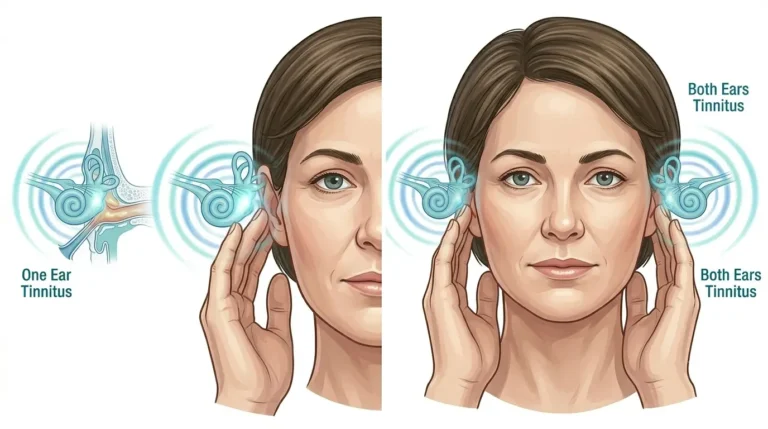
If you’ve noticed a change from tinnitus in both ears to persistent tinnitus predominantly in one ear, our guide to tinnitus in one ear versus both ears explains why the distinction can matter.
A healthcare professional can examine your ears, review your medications and medical history, check your hearing and determine whether further investigation is appropriate.
Why Does My Tinnitus Suddenly Seem Louder?
A sudden increase in perceived tinnitus loudness is sometimes described informally as a tinnitus “spike” or “flare-up.”
Possible circumstances around a temporary increase can include:
- recent loud noise exposure
- a stressful period
- poor sleep or fatigue
- illness or congestion
- changes in the surrounding sound environment
- increased anxiety or attention toward tinnitus
However, it is important not to assume every sudden change is harmless.
If a major tinnitus change occurs with sudden hearing loss, seek urgent medical attention. Sudden sensorineural hearing loss is considered a medical emergency, and early assessment can be important.
Why Is My Tinnitus Worse at Night?
Many people notice that tinnitus becomes much more obvious when they get into bed.
One straightforward explanation is contrast.
During the day, your brain processes conversations, traffic, television, music, household sounds and countless other auditory signals. At night, much of that external sound disappears.
Tinnitus therefore has less competition for your attention.
Fatigue and worry can make the experience even more intrusive.
If nighttime is when your symptoms seem worst, read Why Your Ears Ring More at Night for a deeper explanation and practical bedtime strategies.
Can Caffeine Make Tinnitus Worse?
Caffeine is frequently blamed for tinnitus, but the relationship is not as straightforward as many online claims suggest.
Some people personally report that large amounts of coffee or other caffeinated drinks make them feel more jittery, anxious or interfere with sleep, which could indirectly make tinnitus harder to manage. That does not establish caffeine as a universal tinnitus trigger.
Rather than eliminating caffeine automatically, it can be more useful to observe your own pattern while considering other factors such as sleep and stress.
See Can Caffeine Affect Tinnitus? for our detailed look at the subject.
What Should You Do When Tinnitus Feels Worse?
When tinnitus suddenly grabs your attention, constantly testing or monitoring it can increase anxiety. Instead, work through a simple checklist.
1. Think About What Changed
Consider the previous few days.
Have you attended a loud event? Slept badly? Been unusually stressed? Developed a cold or allergies? Started or changed medication? Noticed hearing changes?
This may reveal a possible pattern without assuming that every fluctuation has a single identifiable cause.
2. Reduce Unnecessary Loud Noise
If you’ve recently had substantial noise exposure, avoid additional unnecessary loud sound.
Use appropriate hearing protection when the environment genuinely requires it, but don’t try to live in complete silence all day.
3. Use Comfortable Background Sound If Helpful
A fan, quiet music, rainfall, nature sounds or another comfortable background sound may reduce the contrast between tinnitus and silence.
Keep the volume comfortable. The aim does not have to be complete masking.
4. Protect Your Sleep
Try to maintain your normal sleep and wake times rather than allowing a tinnitus flare-up to completely disrupt your routine.
If tinnitus is interfering with bedtime, our guide to How to Calm Tinnitus Before Bed provides a practical wind-down approach.
5. Reduce the Stress Response
Try slow breathing, gentle exercise, stretching, relaxation or an absorbing activity rather than repeatedly checking the tinnitus.
The goal isn’t to force the sound away. It is to reduce the distress and attention surrounding it.
6. Arrange an Assessment When Appropriate
If your tinnitus is new, persistent, significantly different, predominantly one-sided, pulsatile or accompanied by hearing changes, speak with a healthcare professional or hearing specialist.
Should You Track Your Tinnitus Triggers?
A short diary can sometimes help identify patterns, especially if tinnitus seems to fluctuate frequently.
You might record:
- sleep quality
- stress level
- significant noise exposure
- illness or congestion
- medication changes
- caffeine or alcohol consumption
- how intrusive tinnitus felt that day
But don’t turn tracking into constant monitoring.
If you rate your tinnitus every few minutes or repeatedly test whether it has changed, the diary itself may keep your attention focused on the sound.
A simple once-daily note for a limited period is usually more practical.
Does Worse Tinnitus Mean More Hearing Damage?
Not necessarily.
Perceived tinnitus intensity can be influenced by attention, stress, fatigue and the amount of environmental sound around you. A bad tinnitus day therefore does not automatically prove that additional hearing damage has occurred.
At the same time, tinnitus following significant noise exposure or tinnitus accompanied by a new hearing change should not simply be attributed to stress.
A hearing assessment can help determine whether hearing has changed.
When Should Worsening Tinnitus Be Medically Assessed?
Consider arranging a medical or hearing assessment if tinnitus is new, persistent, becoming significantly more intrusive, predominantly affects one ear, or is associated with changes in hearing.
Seek prompt or urgent medical care if tinnitus occurs with sudden hearing loss, significant vertigo, facial weakness or other concerning neurological symptoms, or follows a significant head injury.
Tinnitus that beats in time with your pulse should also be medically assessed because pulsatile tinnitus can have causes that differ from more common forms of subjective tinnitus.
If you’re uncertain about a sudden or unusual change, obtaining professional advice is safer than assuming it is simply another tinnitus fluctuation.
Key Takeaways
- Tinnitus can fluctuate, and a louder day does not automatically mean your hearing or underlying condition has become worse.
- Loud noise exposure, stress, poor sleep, hearing changes, earwax, ear problems, medications and increased attention can all be relevant.
- Complete silence may make tinnitus more noticeable for some people because there is less external sound competing for attention.
- Gentle background sound may help reduce tinnitus contrast without needing to completely mask it.
- Don’t stop prescribed medication because you suspect it is affecting tinnitus without discussing it with a healthcare professional.
- Sudden hearing loss with tinnitus requires urgent medical assessment.
- Pulsatile, persistently one-sided or otherwise significantly changed tinnitus should be discussed with an appropriate healthcare professional.
Frequently Asked Questions
Why has my tinnitus suddenly got worse?
A sudden increase may coincide with loud noise exposure, stress, fatigue, poor sleep, illness, congestion or changes in your sound environment. Sometimes there is no obvious trigger. A sudden change accompanied by hearing loss, significant vertigo, facial weakness or other concerning symptoms should be medically assessed promptly.
Can stress make tinnitus suddenly louder?
Stress can make tinnitus more noticeable or distressing for some people. Increased attention and emotional arousal may make an existing tinnitus sound harder to ignore even when there has not necessarily been new damage to the ear.
Can lack of sleep make tinnitus worse?
Poor sleep and fatigue can make tinnitus more difficult to cope with and may increase awareness of the sound. Tinnitus can also interfere with sleep, creating a cycle in which both problems reinforce each other.
Can tinnitus get worse for no reason?
Yes. Tinnitus can fluctuate without an obvious trigger. Not every change can be traced to a particular food, drink, activity or event. If a change is persistent, significant or accompanied by other symptoms, consider seeking professional assessment.
Does louder tinnitus mean my hearing is getting worse?
Not always. Stress, fatigue, attention and environmental sound can influence perceived tinnitus intensity. However, tinnitus can be associated with hearing loss, so a hearing assessment is sensible if you have noticed a change in your hearing.
How long does a tinnitus flare-up last?
There is no universal timeframe. Temporary increases can vary considerably between individuals and situations. If your tinnitus remains significantly different from normal or you develop additional hearing, balance or neurological symptoms, seek medical advice rather than waiting for a particular number of days.
Should I use background noise when tinnitus gets worse?
If you find it comfortable, gentle background sound such as a fan, rainfall, quiet music or another neutral sound may make tinnitus less prominent, particularly in quiet environments. Keep the volume at a comfortable level rather than trying to drown tinnitus out with loud sound.
When should I worry about tinnitus getting worse?
Seek medical advice for significant or persistent changes, pulsatile tinnitus, predominantly one-sided tinnitus or associated hearing changes. Tinnitus occurring with sudden hearing loss, significant vertigo, facial weakness or following a serious head injury requires urgent medical attention.
Medical Sources Reviewed
- National Institute on Deafness and Other Communication Disorders (NIDCD)
- NHS
- Mayo Clinic
- Cleveland Clinic
- American Academy of Otolaryngology–Head and Neck Surgery
Medical Disclaimer
This article is for general educational purposes only and is not a substitute for professional medical advice, diagnosis or treatment. Tinnitus can have many possible causes, and individual symptoms vary. Speak with a qualified healthcare professional if you have concerns about tinnitus or changes in your hearing. Seek urgent medical attention for tinnitus accompanied by sudden hearing loss, significant vertigo, facial weakness or other concerning neurological symptoms, or following a significant head injury.
Final Thoughts
When tinnitus becomes louder or harder to ignore, it is tempting to search for one thing that caused it.
Sometimes there is an identifiable factor — perhaps a noisy event, several nights of poor sleep, increased stress, an ear problem or a medication change. At other times, tinnitus simply fluctuates without an obvious explanation.
Rather than trying every supposed tinnitus remedy you find online, focus first on the fundamentals: protect your hearing from excessive noise, support your sleep, manage stress, use comfortable background sound if it helps and pay attention to meaningful changes in your hearing or other symptoms.
Most importantly, don’t assume that every tinnitus change is something you simply have to manage yourself. New, unusual or concerning symptoms deserve appropriate professional assessment.
Build a Calmer Daily Tinnitus Routine
Looking for practical ways to support better sleep, reduce stress and make living with tinnitus feel more manageable?
👉 Download the Free 7-Day Tinnitus Relief Plan and discover simple daily habits you can start using as part of a calmer tinnitus-management routine.