What Is the Best Noise for Tinnitus? White, Pink, Brown & Nature Sounds Compared
Expert Insight: There is no single “best” noise for tinnitus. White, pink, brown and nature sounds can all provide comfortable background sound for different people. The goal is usually not to overpower tinnitus, but to reduce its contrast with silence using a gentle sound that feels comfortable and easy to listen to.

If tinnitus becomes more noticeable when the room is quiet, adding gentle background sound may make the ringing, buzzing or humming easier to live with.
But what is the best noise for tinnitus?
Search for tinnitus sounds, and you’ll quickly encounter white noise, pink noise, brown noise, rainfall, ocean waves, fans, ambient sounds and countless sound-therapy recordings.
The important thing to understand is that there isn’t one sound that works best for everyone.
Some people prefer the steady hiss of white noise. Others find softer pink noise more comfortable. Some prefer the deeper character of brown noise, while others would rather listen to rainfall, waves or another natural sound.
The goal is generally not to blast tinnitus away. Instead, comfortable background sound may reduce the contrast between tinnitus and silence, provide another sound for your attention to rest on, and make tinnitus feel less prominent.
Quick Answer: What Is the Best Noise for Tinnitus?
There is no single best noise for tinnitus. White noise is commonly used for masking, while pink noise may feel softer to some listeners. Brown noise has a deeper sound, and nature sounds such as rain, ocean waves and flowing water may provide a more relaxing alternative.
The most useful sound is often the one you can comfortably listen to at a safe volume without feeling that you need to continually increase it to overpower your tinnitus.
What This Guide Covers
- How background noise may help with tinnitus
- White noise for tinnitus
- Pink noise for tinnitus
- Brown noise for tinnitus
- Nature and ambient sounds
- White vs pink vs brown noise
- Which sounds may be better for sleep
- Whether you should completely mask tinnitus
- How loud tinnitus background sound should be
- How to choose a sound that works for you
Why Can Background Noise Help With Tinnitus?
Tinnitus is the perception of sound without a corresponding external sound source. It may be experienced as ringing, buzzing, humming, hissing, whistling, clicking or other noises.
If you’re unsure how varied tinnitus can be, our guide to what tinnitus sounds like explains nine common tinnitus sounds and how they can differ from person to person.
One reason tinnitus may feel especially prominent is the contrast between the internal tinnitus sound and a quiet environment.
During the day, your brain is surrounded by ordinary environmental sounds — conversation, traffic, appliances, music, outdoor noise and other everyday activity.
When those sounds disappear, tinnitus may become much easier to notice.
Adding gentle external sound can change that listening environment. Rather than tinnitus being the only prominent sound, your attention has other neutral or pleasant sounds available.
This is why some people use sound generators, fans, quiet music, environmental recordings, or nature sounds as part of their tinnitus management routine.
White Noise for Tinnitus
White noise is probably the best-known type of background noise used for tinnitus.
It contains energy across a broad range of audible frequencies and is often perceived as a steady “shhh” or static-like sound.
It may remind you of:
- Radio or television static
- A steady fan
- Air conditioning
- A constant rushing sound
Because white noise covers a broad frequency range, some people find that it reduces the contrast between their tinnitus and the surrounding environment.
White noise can be particularly convenient because you don’t necessarily need a specialist device. A bedside fan or low-volume sound generator may create the type of neutral background environment some people prefer.
However, white noise isn’t automatically the best choice. Some listeners find its higher-frequency character too sharp or hissy, particularly when trying to relax or sleep.
Pink Noise for Tinnitus
Pink noise is another broadband sound, but its frequency balance differs from white noise.
To many listeners, pink noise sounds softer, smoother and less sharp than white noise.
It can have a character somewhat similar to:
- Steady rainfall
- Rustling leaves
- Wind
- A soft rushing sound
For someone who finds white noise harsh, pink noise may simply be more comfortable to listen to.
Pink noise is also available through many sound machines and audio apps, making it easy to experiment with at a low volume.
That doesn’t mean pink noise has been proven to be the best tinnitus sound. Personal comfort still matters.
Brown Noise for Tinnitus
Brown noise — sometimes called Brownian or red noise — has more emphasis on lower frequencies than white or pink noise.
As a result, it tends to sound deeper and more bass-heavy.
People sometimes compare it with:
- A deep waterfall
- Distant thunder
- A low rushing sound
- A deep rumble
Some people prefer this deeper sound because they find high-frequency white noise unpleasant.
However, brown noise isn’t automatically better for low-pitched or high-pitched tinnitus, and you don’t need to match a particular “colour” of noise to your tinnitus without professional guidance.
The practical question is simply whether the sound creates a comfortable listening environment for you.
Nature Sounds for Tinnitus
Not everyone enjoys listening to artificial broadband noise.
Nature sounds can provide a gentler alternative.
Common choices include:
- Rainfall
- Ocean waves
- Flowing streams
- Waterfalls
- Wind through trees
- Forest ambience
- Soft nighttime nature sounds
For some people, these sounds have an additional advantage: they feel more relaxing and natural than continuous static.
This can be especially useful when the goal is not only to reduce awareness of tinnitus but also to create a calmer environment before sleep.
If nature audio appeals to you, explore our guide to the best natural sounds for tinnitus relief for more options, including rainfall, ocean waves and other ambient soundscapes.
Ambient Sounds and Everyday Background Noise
You don’t necessarily need a dedicated tinnitus soundtrack.
Ordinary environmental sound may be enough for some people.
Examples include:
- A bedside fan
- An air conditioner
- Soft music
- A quiet radio
- Low-level television sound
- An open window where appropriate
- A tabletop water fountain
The objective is to create a sound-enriched environment that feels comfortable rather than forcing yourself to listen to a particular type of noise because it is labelled “for tinnitus.”
White Noise vs Pink Noise vs Brown Noise for Tinnitus
The three sound colours differ mainly in how sound energy is distributed across frequencies, which changes how they sound to the listener.
| Sound | General Character | May Suit Someone Who… |
|---|---|---|
| White Noise | Bright, steady, static-like | Likes consistent broadband background sound |
| Pink Noise | Softer and smoother | Finds white noise too sharp |
| Brown Noise | Deeper and lower | Prefers a bass-heavy, less hissy sound |
| Nature Sounds | Variable, natural and often relaxing | Prefers rain, waves, water or outdoor ambience |
| Fan/Ambient Sound | Simple and consistent | Wants an easy everyday background option |
This comparison shouldn’t be interpreted as a medical ranking.
There is no rule saying someone with a high-pitched tinnitus tone needs one type of noise while someone with a low hum needs another.
Comfort, listening habits, hearing ability and the situation in which you’re using sound all matter.
Which Noise Is Best for Tinnitus at Night?
Nighttime is when many people find tinnitus particularly difficult to ignore.
A quiet bedroom creates greater contrast between tinnitus and the surrounding environment, while tiredness and stress may make the sound feel more intrusive.
If this happens to you, our guide explaining why tinnitus can seem louder at night looks at this effect in more detail.
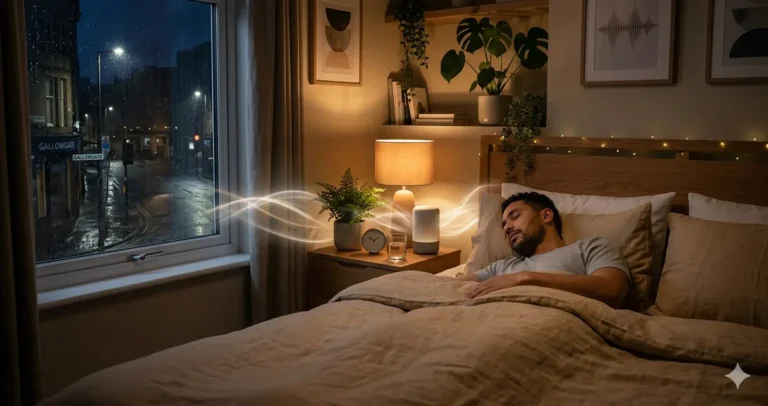
For bedtime, the best sound is generally one that is comfortable, predictable and not stimulating.
Options worth experimenting with include:
- Gentle rainfall
- Ocean waves
- Low-level white noise
- Pink noise
- A quiet fan
- Soft ambient audio
If sleep is one of your biggest tinnitus challenges, you may also find our guide on how to calm tinnitus before bed useful for building a more relaxing nighttime routine.
Is Silence Bad for Tinnitus?
Silence itself isn’t necessarily harmful to your ears.
However, tinnitus can become much more noticeable when there is very little external sound competing for your attention.
This increased contrast can make ringing or buzzing feel louder even when the tinnitus itself hasn’t necessarily changed.
For that reason, some people prefer a lightly sound-enriched environment rather than complete silence.
Our full guide to silence and tinnitus explains why quiet environments can make tinnitus stand out and when gentle background sound may help.
Should You Completely Mask Tinnitus?
Not necessarily.
It’s easy to assume that sound therapy means turning up another noise until tinnitus becomes completely inaudible.
But louder isn’t automatically better.
For everyday self-management, many people prefer enough background sound to reduce the contrast with tinnitus while keeping the listening environment comfortable.
Sound-based tinnitus therapies can have different goals. Sound may be used for masking, distraction, relaxation or as part of a structured program intended to help someone become less reactive to tinnitus.
If you’re considering formal sound therapy or tinnitus retraining therapy, an audiologist or other qualified hearing professional can provide individualised guidance.
What Is Tinnitus Habituation?
Habituation broadly refers to becoming less aware of or less emotionally reactive to a repeated stimulus over time.
In tinnitus management, the aim isn’t necessarily to make the tinnitus sound disappear. Instead, some approaches focus on helping the brain treat tinnitus as less important or threatening so it attracts less attention.
Sound may form part of that process for some people, particularly when combined with appropriate education or counselling.
This is different from trying to drown tinnitus out with increasingly loud noise.
What Is the Best Frequency for Tinnitus?
You may encounter online videos or recordings claiming that a particular frequency can stop, cure or eliminate tinnitus.
Be cautious with these claims.
Tinnitus varies substantially between individuals, and there isn’t one universal frequency that has been shown to eliminate tinnitus for everyone.
Some clinical approaches use individually selected or professionally adjusted sounds, but this is different from claiming that one online frequency is a universal tinnitus cure.
You also shouldn’t increase headphone volume in an attempt to match or overpower your tinnitus tone.
Can Headphones Be Used for Tinnitus Sounds?
Headphones can play background sounds, but volume matters.
The aim should never be to overpower tinnitus by listening at uncomfortable or excessively high levels.
For nighttime listening in particular, some people prefer a bedside speaker, sound machine, fan or pillow speaker so they don’t need to wear headphones while sleeping.
If you frequently use headphones for music, masking sounds or relaxation audio, read our guide to headphones and tinnitus for practical safe-listening considerations.
How to Find the Best Tinnitus Sound for You
Rather than searching endlessly for the “perfect” tinnitus frequency, a simple comparison can be more useful.
Start at a low, comfortable volume and try several different sounds on different occasions.
You might compare:
- White noise
- Pink noise
- Brown noise
- Rain
- Ocean waves
- A fan
- Soft instrumental music
Notice which option feels least irritating and makes it easiest to relax, concentrate or fall asleep.
You may also discover that you prefer different sounds at different times. Rain might work well at bedtime, while a fan or neutral ambient sound feels better when working or reading.
Quick Decision Guide: Which Tinnitus Sound Should I Try?
| If You… | Consider Trying… |
|---|---|
| Want simple steady background sound | White noise or a fan |
| Find white noise too sharp | Pink noise |
| Prefer deeper sounds | Brown noise |
| Want something more natural | Rain, waves or flowing water |
| Struggle most at bedtime | Gentle rain, pink noise, a fan or another calming sound |
| Find complete silence uncomfortable | Low-level ambient sound |
Think of these as starting points rather than prescriptions. If a sound irritates you or makes your tinnitus feel more intrusive, there’s no reason to continue using it simply because someone else recommends it.
Can Stress Affect Which Sounds Feel Helpful?
Possibly.
Tinnitus can become harder to ignore when you’re tense, anxious or mentally exhausted. In that situation, a sound you find genuinely relaxing may be more comfortable than a harsh masking noise.
This is why nature sounds, gentle ambient audio and relaxation techniques often fit naturally together.
If stress frequently seems to increase your tinnitus awareness, read our guide to stress and tinnitus to understand the connection and practical ways to manage it.
You can also explore our relaxation techniques for tinnitus if you want to combine sound with breathing, mindfulness and other calming habits.
When Should You Seek Medical Advice?
Background sound can be a useful self-management tool, but it shouldn’t replace appropriate medical evaluation.
Speak with a healthcare professional if tinnitus is persistent, worsening, affecting your sleep or concentration, or causing significant distress.
Tinnitus that beats in time with your pulse should be medically assessed.
Seek prompt medical care for tinnitus associated with sudden hearing loss, significant dizziness or vertigo, facial weakness, neurological symptoms, or following a significant head injury.
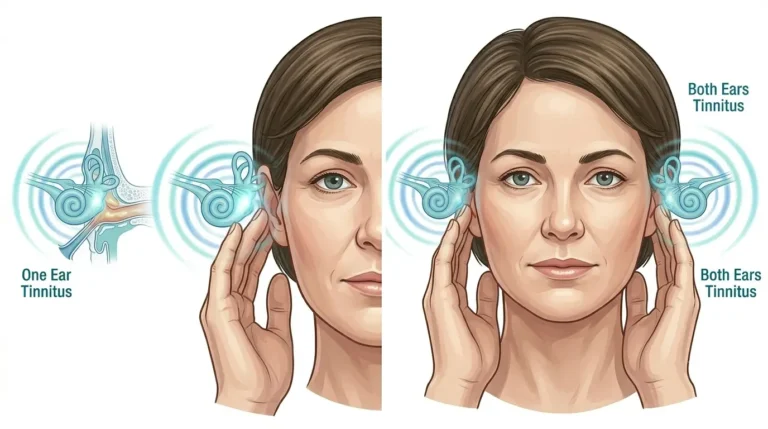
Persistent tinnitus affecting only one ear also deserves appropriate professional assessment. Our guide to tinnitus in one ear vs both ears explains these different patterns in more detail.
Key Takeaways
- There is no single best noise for everyone with tinnitus.
- White noise provides broad, steady background sound but may feel too sharp for some listeners.
- Pink noise often sounds softer and smoother than white noise.
- Brown noise has a deeper, lower-frequency character.
- Nature sounds such as rain, ocean waves and flowing water may provide a relaxing alternative.
- A fan or other ordinary ambient sound may be enough for some people.
- You don’t necessarily need to completely cover tinnitus for background sound to be useful.
- Keep sound at a comfortable level rather than trying to overpower tinnitus.
- There is no universal frequency proven to eliminate tinnitus.
- The best practical choice is usually the sound that feels comfortable and makes tinnitus less intrusive for you.
Frequently Asked Questions
What noise is best for tinnitus?
There isn’t one noise that works best for everyone. White noise, pink noise, nature sounds, fans and other gentle background sounds are common options. Personal comfort and the situation in which you’re using the sound matter.
Is white noise or pink noise better for tinnitus?
Neither is universally better. White noise has a brighter, static-like character, while pink noise tends to sound softer to many listeners. Try both at a comfortable volume and see which you prefer.
Is brown noise good for tinnitus?
Some people enjoy brown noise because of its deeper sound, particularly if they find white noise too sharp. However, it hasn’t been established as universally superior for tinnitus.
What colour noise is best for tinnitus?
There is no single best colour of noise for tinnitus. White, pink and brown noise have different sound characteristics, so comfort and personal preference are useful guides when experimenting with background sound.
Are nature sounds good for tinnitus?
Nature sounds such as rainfall, waves and flowing water are commonly used as relaxing background audio. They may reduce the contrast between tinnitus and silence and provide another sound to focus on.
What is the best sound for tinnitus at night?
Many people prefer gentle, predictable sounds such as rainfall, ocean waves, pink noise, low-level white noise or a fan. The best bedtime sound is one that feels relaxing rather than stimulating.
Should tinnitus sound therapy be louder than the tinnitus?
Not necessarily. Background sound does not always need to mask tinnitus completely. For general self-management, comfortable low-level sound may be enough to reduce contrast and make tinnitus less prominent.
Is there a frequency that stops tinnitus?
There is no single universal frequency proven to stop tinnitus for everyone. Be cautious of recordings or products promising that a specific frequency can cure tinnitus.
Medical Sources Reviewed
- National Institute on Deafness and Other Communication Disorders (NIDCD)
- NHS
- Mayo Clinic
- Cleveland Clinic
- American Academy of Otolaryngology–Head and Neck Surgery
Medical Disclaimer
This article is for general educational and informational purposes only and is not intended to diagnose, treat, cure or prevent any medical condition. It should not replace advice from a qualified healthcare professional. If you experience new, persistent, suddenly changing or concerning tinnitus symptoms, seek appropriate medical advice.
Final Thoughts
So, what is the best noise for tinnitus?
For some people, it’s white noise. Others prefer softer pink noise, deeper brown noise, rainfall, ocean waves or something as simple as a bedside fan.
Rather than searching for one perfect tinnitus sound, experiment gently and focus on comfort.
The aim isn’t necessarily to fight tinnitus with more noise. A calm, sound-enriched environment may reduce the contrast with silence and give your attention somewhere else to rest.
And sound is only one part of tinnitus self-management. Sleep, stress, hearing protection and everyday routines can all matter too.
For a broader approach, explore our tinnitus daily management guide for practical habits that may make tinnitus easier to manage from day to day.
Build a Calmer Daily Tinnitus Routine
👉 Download the Free 7-Day Tinnitus Relief Plan
If you’re looking for practical, step-by-step guidance, download our FREE 7-Day Tinnitus Relief Plan. It includes simple daily habits, relaxation exercises, sleep tips, and wellness strategies designed to help you feel more in control of your tinnitus journey. Discover simple daily habits designed to support better sleep, reduced stress, and improved ear wellness naturally.